Published Date:
November 13, 2026

Winter in Delhi NCR often brings a familiar concern for parents: rising air pollution. As temperatures drop, smog can make the morning school commute uncomfortable and increase children's exposure to harmful pollutants.
From waiting at school gates to playing during recess, everyday activities may need a little adjustment when air quality deteriorates.
Similarly, a School with Indoor & Outdoor Sports in Faridabad can provide flexibility by shifting suitable sports and physical education sessions indoors when outdoor air quality becomes unhealthy.
However, protecting children does not mean putting their learning, fitness, or fun on hold. With a few thoughtful precautions, parents and schools can help children stay safer while maintaining healthy routines.
This guide covers both: how to keep your child safe on the school commute, and how to keep them active and happy inside.
Children’s lungs are still growing. They breathe in more air for their body size, and they spend a lot of time running around outdoors. That means more polluted air goes in.
Watch for these signs:
If your child has asthma or allergies, talk to your paediatrician before smog season gets bad. Don’t wait for a bad day.
When outdoor exposure cannot be avoided, a properly fitted respirator may offer additional protection against particulate pollution.
N95 masks for school children can help filter fine particles when they fit correctly and are used appropriately. However, a mask is not a substitute for reducing exposure.
Parents should consider these precautions:
Ordinary cloth masks and loose-fitting face coverings do not provide equivalent filtration against fine particulate pollution.
When pollution levels rise, children may miss outdoor games, physical education classes, and playground time. Instead of eliminating physical activity altogether, schools can introduce suitable indoor alternatives.
Some engaging indoor activities for students include:
These activities should take place in spaces with reasonably clean indoor air. Vigorous exercise should be avoided if indoor pollution is also high or a child is experiencing respiratory symptoms.
Moving activities indoors is helpful only when the indoor environment is managed properly. Outdoor pollution can enter buildings, while indoor sources may add to the problem.
Schools can take practical steps to maintain a healthier learning environment:
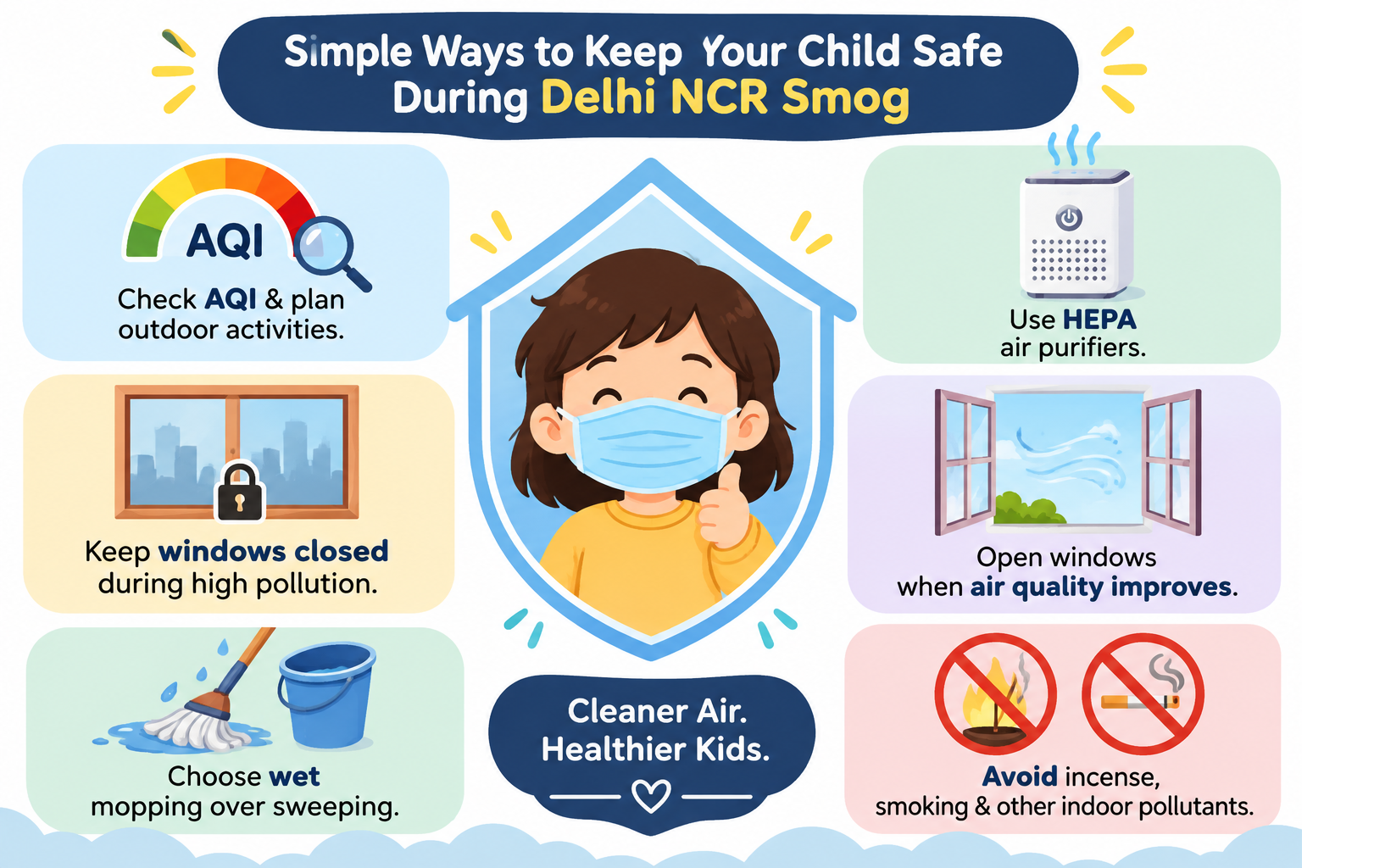
Parents can also encourage children to wash their hands and face after returning home and maintain regular hydration.
Apart from physical exercise, children need activities that keep them mentally engaged and socially connected.
Schools can introduce indoor activities for students that combine learning, creativity, and teamwork.
These activities help children enjoy school even when outdoor routines need to change.
Schools play an important role in reducing children's exposure to pollution while ensuring continuity in education and physical development.
A Modern School Campus in Faridabad can support students through thoughtfully planned indoor learning spaces, pollution-aware activity schedules, and facilities that allow children to remain engaged throughout the winter season.
Before your child leaves for school, keep these simple habits in mind:
Smog season is stressful, but using the right methods and following precautions, you can keep your kids safe. Check the AQI, use a properly fitted mask, keep the commute short, and make your home a clean, active space.
Most of all, don’t let the season steal your child’s energy. With a few indoor routines and a school that plans for these months, they can stay healthy, busy and happy until the air clears.