Published Date:
September 28, 2026
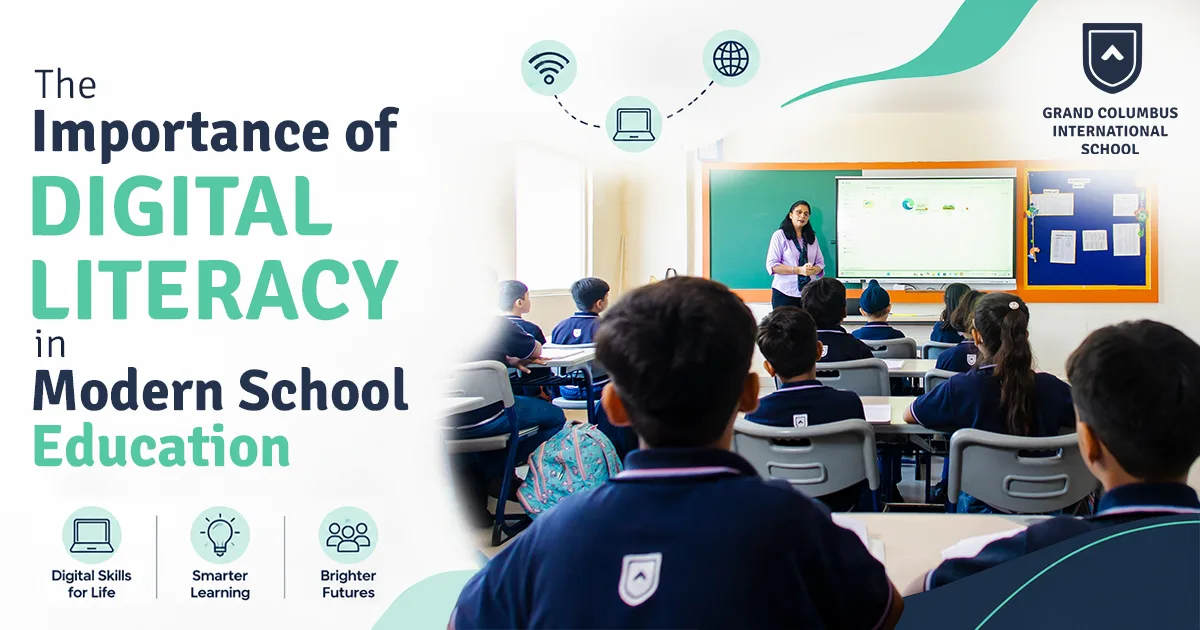
A decade ago, computer class meant learning to type, maybe formatting a document in MS Word if you were lucky. That whole idea of "computer skills" feels almost quaint now. Kids today grow up surrounded by AI tools, online research, shared docs, group chats, and an internet that hands them excellent information and complete nonsense in the same search result.
That's why digital literacy in education isn't really optional anymore. It used to be a nice-to-have. Now it's just part of what a decent school teaches. And it's not only about knowing how to use a device, it's about thinking clearly while you're using one.
People often mix digital literacy up with basic computer familiarity, opening an app, browsing the internet, that sort of thing. That's the surface. The real thing is being able to look at information and actually question it, communicate responsibly online, protect your own privacy, and use digital tools to build and solve, not just scroll and absorb.
You start to see the importance of digital literacy once you notice how much of a student's day already runs through a screen. Research for a project. Group work on a shared doc. Even a quick message to a classmate about homework. It's all digital now, whether anyone planned it that way or not.
Schools have always been where reading, writing, and arithmetic get built. Digital literacy in schools is becoming something like a fourth pillar alongside those, and honestly, it's not hard to see why.
A few reasons this is urgent, not optional:
Treat digital literacy like a standalone computer period, and you end up with students who can use apps just fine but can't think critically about anything they find on them.
Building real digital literacy skills usually comes down to a handful of areas, and they need to be taught consistently, not crammed into one or two lessons and forgotten.
Students need to learn to ask where something came from, whether the source is actually credible, and how to cross check a claim before just believing it. This matters for a history project just as much as it does for scrolling through social media at 11pm.
This isn't really about rules. It's more about helping students understand that what they post or share has a long tail, from a casual email to a comment left on someone's post.
Simple stuff, recognising a phishing attempt, understanding why password safety matters, knowing when to be cautious about sharing personal details online. These are becoming direct teaching points rather than things schools just assume kids will figure out.
Beyond browsing, this means real comfort with productivity tools, a basic sense of coding logic, and increasingly, knowing how to use AI tools responsibly, what they're actually good at, and where they fall apart.
Parents and teachers worry about this a lot, and fairly. Pushing digital skills for students too hard or too early can backfire. More screen time isn't automatically better, no matter how it's marketed. The goal isn't maximum exposure. It's purposeful exposure.
A few things that tend to separate the programs that actually work:
You can see the shift toward genuine digital literacy in how schools are rethinking their classrooms and curriculum, not just bolting on a new subject line. This is where future-ready education in Faridabad starts to look pretty different from the model a lot of parents grew up with.
Schools that are actually investing here tend to show it in a few visible ways:
These kinds of modern learning facilities in Faridabad are turning into a real differentiator for parents comparing schools. Strong digital infrastructure without thoughtful teaching behind it, though, tends to produce the same shallow results as no digital exposure at all.
Worth remembering: digital literacy isn't the end goal by itself. The strongest programs treat it as one piece of something bigger. A genuinely holistic education school in Faridabad combines digital fluency with critical thinking, communication, creativity, and solid values, so students walk out prepared for a lot more than just navigating technology.
Digital literacy isn't a bonus feature schools offer when they have spare budget anymore. It's fast becoming as basic as reading and writing. Kids who learn to question information, communicate responsibly online, and use digital tools with some purpose will simply be better off, whatever comes next, college, a job, or just getting through an increasingly online world without feeling lost.
Basic concepts can start as early as primary school, age appropriate lessons on device use, online safety, simple research skills, building up gradually toward things like information evaluation and cybersecurity awareness in higher grades.
Not really. Purposeful, well guided digital learning matters far more than raw screen time. A school with less screen time but sharper, more structured digital lessons often does better than one where devices are just always on.
Stay involved in what tools and platforms your kid is actually using, have real conversations about online safety, and model decent digital habits yourself. That goes a long way in reinforcing what school is trying to teach.
No. It applies across every subject, evaluating sources in a history project, collaborating on a group presentation, all of it. It's a general life skill, not something tied to one classroom.
Look past the smart boards and computer labs. Ask how digital tools actually show up in daily lessons, whether teachers get regular training, and whether there's a real digital citizenship curriculum rather than the occasional one-off session.