Published Date:
October 29, 2026
For every student, exam season is so stressful. The nervousness, worry about exams and tension about marks. The good news is that in this difficult time, parents should be the biggest supporters of their child. This anxiety impacts students, and they suffer in exams. This guide will help you and your parents learn how to reduce exam stress.
Exam stress in students is the real pressure they feel during exam season and when there is time for results are announced. Some of the common causes are fear of failing, comparison with others, a heavy syllabus and poor sleep. When the pressure increases, it becomes exam anxiety in students: fear that blocks thinking and memory.
1. Set Realistic Expectations:
During this time, you have to focus on your child’s progress rather than demanding perfect marks. Encourage improvement at their own pace.
2. Maintain Open Communication:
Being parents, talk to your child about their worries without judging them. Listen patiently and offer reassurance.
3. Create a Study Routine:
While preparing for exams, help your child follow a balanced timetable with time for studies, breaks, and hobbies.
4. Provide a Comfortable Study Space:
You have to create a quiet, organised area with fewer distractions so your child can concentrate better and study hard.
5. Encourage Regular Breaks:
Make sure your child takes short breaks between study sessions to relax and avoid mental fatigue.
6. Ensure Proper Sleep:
Encourage a consistent sleep schedule. Adequate rest supports memory, concentration, and emotional well-being.
7. Promote Physical Activity:
Encourage walking, cycling, sports, or outdoor play to help your child relax and release tension.
8. Avoid Comparisons:
Every child learns differently. Comparing marks with siblings or classmates can increase pressure and lower confidence.
9. Appreciate Effort:
Praise your child for consistency, hard work, and improvement rather than focusing only on results.
10. Seek Professional Support:
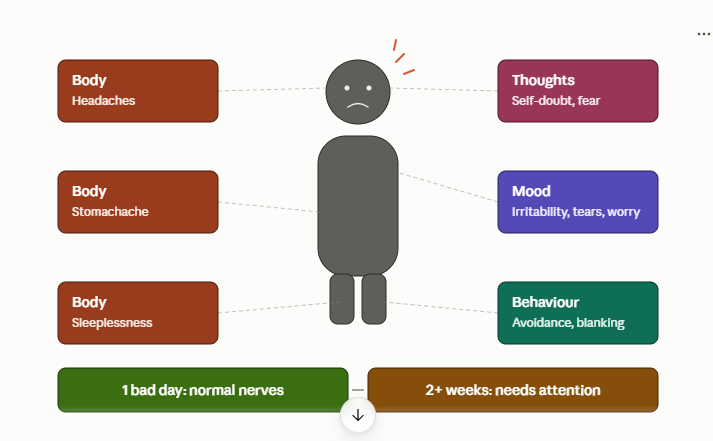
When needed, if stress affects your child’s sleep, mood, or daily routine for a prolonged period, consider speaking with a counsellor or mental health professional.
The positivity towards tests begins long before board exams. Those who are looking for good primary schooling in Faridabad make sure that, with providing better education, they also make children feel safe to ask questions and make mistakes. That is the idea behind future-ready education in Faridabad, where life skills such as resilience, communication and time management are also offered with academics. Children who learn these early handle exam pressure far better later.
Listen without judging, keep realistic goals, protect sleep and meals, teach simple breathing and praise effort over marks.
Headaches, stomach aches, poor sleep, irritability, avoiding study and negative self-talk are the most common signs.
There is no fixed number. Short, focused sessions with breaks and enough sleep work better than long, tiring stretches.
If stress is intense, lasts weeks, disrupts daily life or involves hopelessness or talk of self-harm, contact a school counsellor or a qualified professional promptly.